Wastewater Systems Go Into the Ground
Septic Installation in Denver for properties without municipal sewer access that need functional wastewater treatment
Callaway Grading provides septic installation in Denver, North Carolina and surrounding areas for homeowners and developers building on properties without access to municipal sewer systems. A properly installed septic system ensures reliable wastewater treatment and long-term performance for rural and Lake Norman area properties.
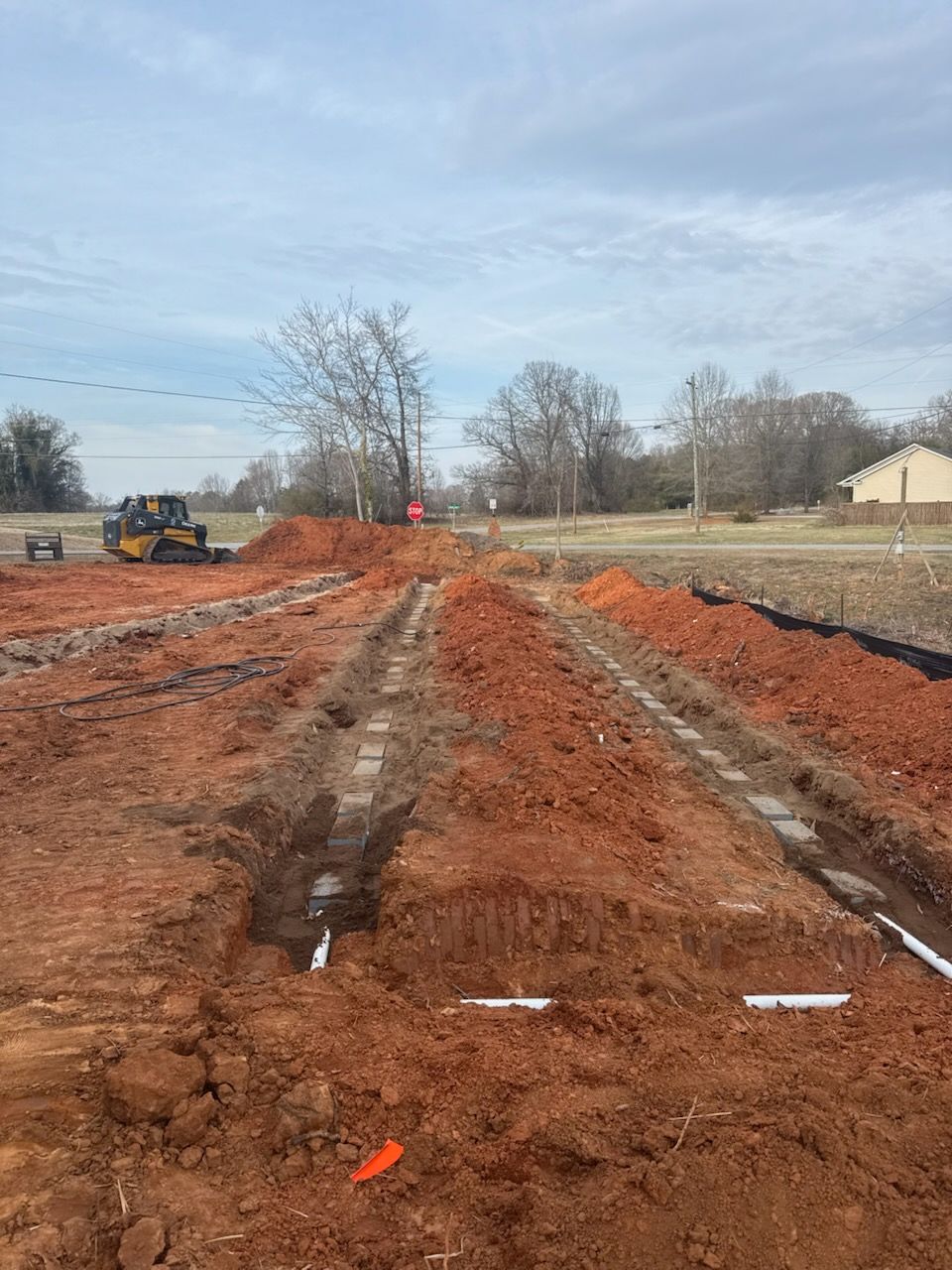
Septic installation includes excavating for the tank and drain field, setting the tank at the correct depth, and connecting outlet lines so wastewater flows properly. Crews work with soil evaluations and local health department requirements to place the drain field in suitable soil for effective filtration.
Proper installation is critical to prevent system failure, contamination, and costly repairs. Callaway Grading ensures each system is installed to meet site conditions, code requirements, and construction timelines.
What Changes After Septic Installation
- A fully functional wastewater system that operates below ground
- Tank access points visible for maintenance
- A leveled or slightly raised drain field area
- No odors, pooling, or drainage issues when properly maintained
Septic systems operate primarily through gravity and soil absorption, requiring minimal mechanical components unless site conditions demand otherwise.
Questions Homeowners Ask About Septic Systems
Homeowners in Denver often ask about system sizing, soil requirements, and maintenance after septic installation is complete.
What determines the size of the septic tank and drain field?
Tank and field sizes are calculated based on the number of bedrooms in the home, which estimates daily wastewater volume, and soil percolation rates measured during site testing.
How deep does the septic tank sit after installation?
Tanks are typically buried with their tops one to two feet below finished grade so access lids remain reachable for pumping while keeping the system out of sight.
When does a septic system need pumping after installation?
Most systems require pumping every three to five years depending on household size and water use, with the first service often recommended within three years of installation.
Why do some properties in Denver require alternative septic designs?
Soil that drains too slowly or too quickly, high water tables, or limited space can require engineered systems with sand filters, mound fields, or pump stations instead of conventional drain fields.
What happens if the drain field area gets compacted by vehicles or equipment?
Heavy loads compress soil and damage distribution lines, reducing the drain field's ability to absorb effluent and potentially causing backups or surface seepage.
Callaway Grading installs septic systems for properties across the Lake Norman area where municipal sewer service is unavailable. Reach out to discuss your property's soil conditions and schedule installation that fits your construction timeline.